I'm skeptical for two other reasons: first, a number of fascist writers -- Carl Schmitt, for instance -- argued that liberal democracies were only fictions built upon nice, illusory stilts; take away the statutes, the "rule by law, not men," and what you had in times of crises was a sovereign, he who "decides the exception." That partially explains the crucial centrality of the Fuhrer figure in the Third Reich; what he said was the law, and fascism. So, if he was for trade unions for one second, then against it the next, no contradiction needed to be admitted ideologically: He stayed the same after all.
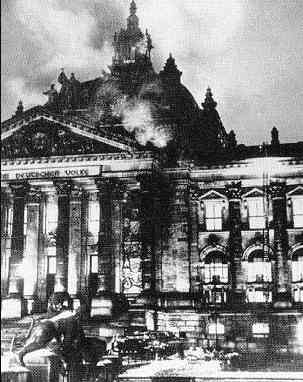
That takes away from its ideological cred, but here's my second reason: I think it's far more interesting and useful to look at the historical context and empirical evidence from Germany circa 1920s to explain fascism's rise. This relates to my general antipathy to political philosophy and the exaggerated role "ideas" supposedly play in politics. In other words, look at unemployment rates, the humiliation of the Versailles Treaty and the stabbed-in-the-back memes, or even the Reichstag fire, before you look at fascism's intellectual basis.
Anyone up for a fall reading of The Origins of Totalitarianism?


No comments:
Post a Comment